REVIEW · PORTO
Porto 6 bridges Speedboat Tour along the Douro
Book on Viator →Operated by BBDouro · Bookable on Viator
Six bridges in 45 minutes is the hook. What makes this Porto on-water ride fun is the mix of speedboat thrills and fast, easy waterfront views of the city’s icons. I also love how the boats focus on the best angles for Porto and Vila Nova de Gaia without making you do a long walking day. One possible drawback: it is short, so you are mostly viewing landmarks from the water rather than taking time inside buildings.
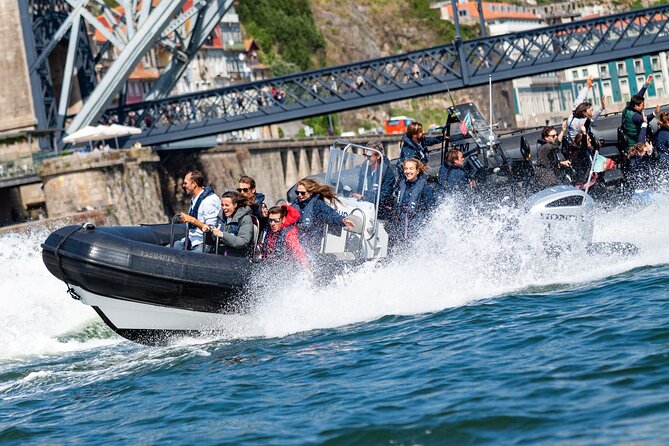
You meet at BBDouro Douro Marina in Vila Nova de Gaia, then you cruise along the Douro toward Porto with a life vest on. The vibe is active, but the pace is controlled: there are three boats, with up to 10 people per boat, and the tour caps at 38 people total. It is offered in English, and you’ll use a mobile ticket.
In This Review
- Key things to know before you go
- Finding BBDouro Douro Marina in Vila Nova de Gaia
- How the speedboat ride really feels: safety, splash, and timing
- The value of seeing 6 bridges from the water
- Stop 1: The Douro River views toward the coast
- Stop 2: Douro Marina and the modern harbor side of Gaia
- Stop 3: Afurada’s heritage edge by the river mouth
- Stop 4: Ponte da Arrábida and the bridge story you can see
- Stops 5 and 6: Tram history at Museu do Carro Electrico and the tile-covered church
- Stop 7: Alfândega Porto Congress Centre, the old Customs building energy
- Stop 8: Passeio das Virtudes, a vertical garden with city-to-river sightlines
- Stop 9: Torre dos Clérigos and the promise of a big climb
- Stop 10: Cais de Gaia and the wine-cellar waterfront
- Stop 11: Rabelo boats and the working-wine tradition
- Stop 12: Ribeira, the UNESCO core along the water
- Stop 13: Paço Episcopal and the bishops’ residence above the cathedral
- Stop 14 and 15: Dom Luís I Bridge and Serra do Pilar’s circular church
- Stop 16: Jardim do Palácio de Cristal and the Crystal Palace memory
- Stop 17: Reserva Natural Estuario do Douro and the bird corridor idea
- Stop 18: Jardim do Passeio Alegre and the turtle fountain
- What to bring (and what to skip) for a comfy, fun ride
- Who should book this speedboat and who should pass
- Should you book Porto 6 Bridges with BBDouro?
- FAQ
- How long is the Porto 6 bridges speedboat tour on the Douro?
- Where do I meet for the tour?
- Is the tour offered in English?
- Do I need a printed ticket?
- What is the minimum age to join?
- What happens if the tour is canceled due to poor weather?
- Can I get a full refund if I cancel?
Key things to know before you go
- Meet at Douro Marina (Gaia): the tour starts and ends at BBDouro Douro Marina, so you do not need to figure out transport after.
- Small groups on each boat: 3 boats, with a max of 10 people per boat, keeps the ride feeling personal.
- Life vest is part of the fun: safety gear is standard, and jackets may be available if the weather turns.
- Expect a quick hit of Porto sights: plan for views over museum time in just about 45 minutes.
- Sea is possible, not guaranteed: if conditions allow, the route can go beyond the river out toward the ocean.
- Minimum age is 10: good to know if you are traveling with kids.
Finding BBDouro Douro Marina in Vila Nova de Gaia
The meeting point is at BBDouro Douro Marina, R. da Praia, 4400-554 Vila Nova de Gaia. I like this setup because it anchors the whole experience in one place. You start there, then you come back there, so the rest of your Porto day stays simple.
Because the meeting point is near public transportation, you can treat this like a flexible add-on. If you are already staying in Porto, you can still make it work by crossing over to Gaia and arriving a bit early to check in without stress.
How the speedboat ride really feels: safety, splash, and timing
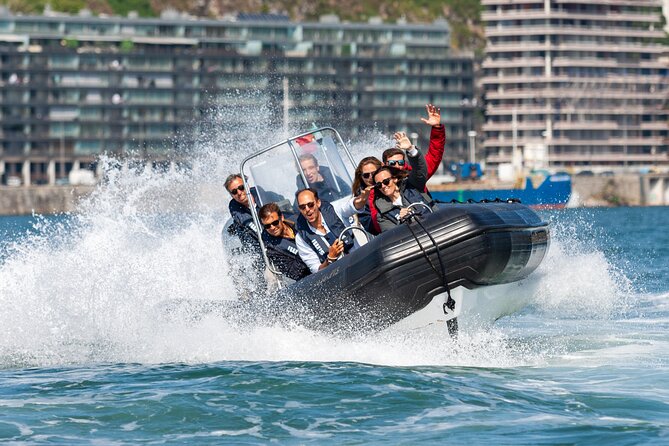
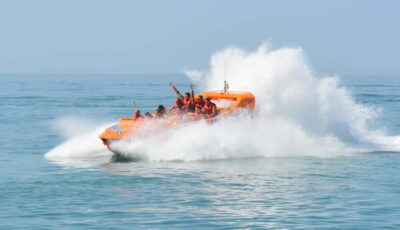
This is not a slow sightseeing cruise. You get a speedboat ride designed to show you a moving, wide-angle version of the Douro waterfront. The captain’s job is to keep the route smooth and safe, and the life vest is standard gear, which helps you relax and enjoy the ride instead of thinking about safety.
Bring the mindset that you might get a little wet. One review specifically called out that the experience got them wet in a fun way, and the operator offered jackets just in case. So, even if the forecast looks fine, pack something that can handle spray.
Timing matters, too. The tour is about 45 minutes, so once you’re onboard you will be in full-view mode the whole time. That short duration is part of the value: you get a concentrated “see it from the water” overview without losing half a day.
The value of seeing 6 bridges from the water
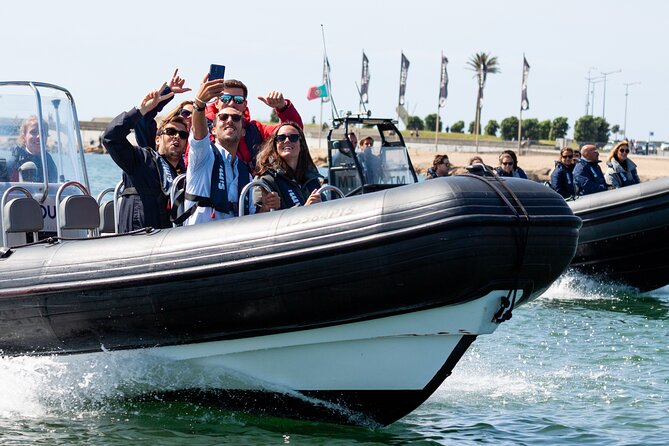
Porto and Vila Nova de Gaia are built around water access, and the bridges are the biggest proof. Seeing them from the Douro gives you a different mental map than looking at them from streets. You get the river’s bends, the waterfront heights, and the way Porto stacks above the waterline.
In particular, the Arrábida Bridge is a major landmark on this kind of route. It is an arch bridge connecting Porto and Gaia, inaugurated in 1963, and at the time of construction it was noted for having the largest reinforced concrete arch of any bridge in the world. You do not need to be a bridge nerd to appreciate the scale once you see it from moving water.
Then there is Dom Luís I Bridge. It is a metal bridge about 395 meters long and roughly 8 meters wide, with two decks linking Porto and Gaia. Completed in 1888, it is still one of the most emblematic points of the city, and from the river you can actually understand why it became such a visual centerpiece.
Stop 1: The Douro River views toward the coast
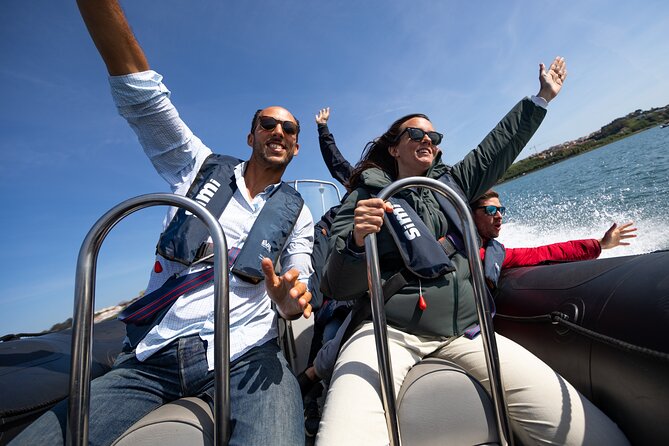
The tour begins on the Douro River with a focus on the emblematic areas as you look from the sea-side direction. This is where you start picking out the “Porto and Gaia from the water” themes.
You’ll get views tied to the wine world and the river’s working identity, including the Wine Caves and the Rabelo boats, which historically carried wine barrels downriver. You may also spot the kind of clues that point you back to the city: street and church landmarks such as Ouro Street and Clerics Church show up in the mix when you are moving along the waterfront.
The Douro Estuary is also part of the picture here. It is protected and supports wildlife, and this setting matters because it reminds you this is not only a city river. It is also an ecological corridor, which becomes more obvious as you move toward areas near the mouth.
Stop 2: Douro Marina and the modern harbor side of Gaia
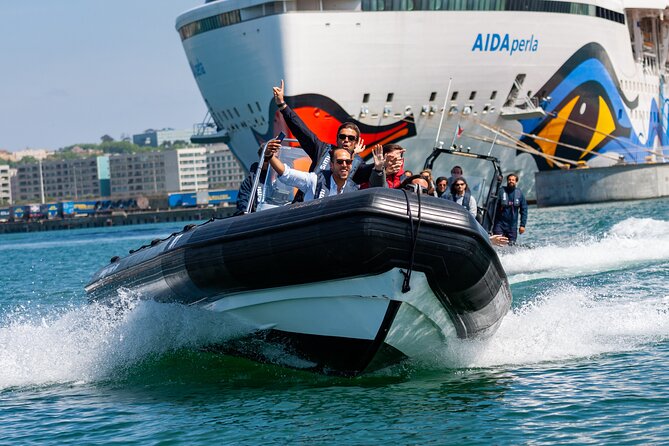
Next up is Douro Marina, a public marina that opened to the public in February 2012. I like this stop because it shows a different side of the waterfront than the old trading areas. The marina is tied to a big investment—8.5 million euros total, including floating equipment—and it has the capacity to accommodate around 300 vessels up to 20 meters long.
Even from the boat, it helps to understand what you’re passing. A marina like this includes repair and maintenance areas, shops and restaurants, plus water sports operations. Translation for you: this is where the Douro feels active and current—less medieval romance, more “this river is still used.”
Stop 3: Afurada’s heritage edge by the river mouth
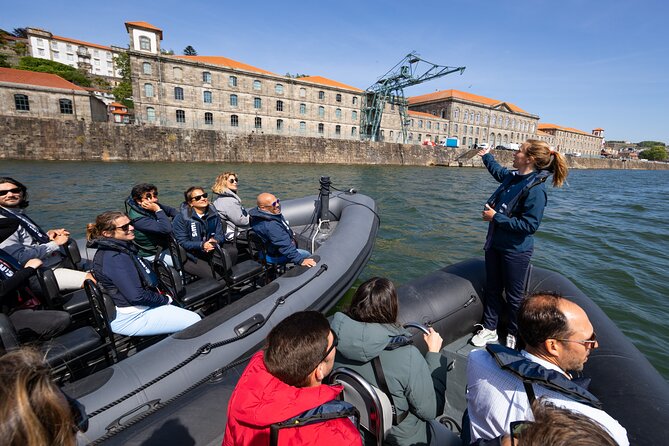
Afurada sits on the edge of the Douro near where the river meets the sea. It’s a small fishing community, with an origin tied to fishing as its main activity for early inhabitants.
On a speedboat, you will mostly absorb this as a sense of place rather than a deep visit. Still, knowing Afurada’s fishing roots helps you interpret what you see near the estuary and why the river mouth area feels different from the dense city edges of Porto proper.
Stop 4: Ponte da Arrábida and the bridge story you can see
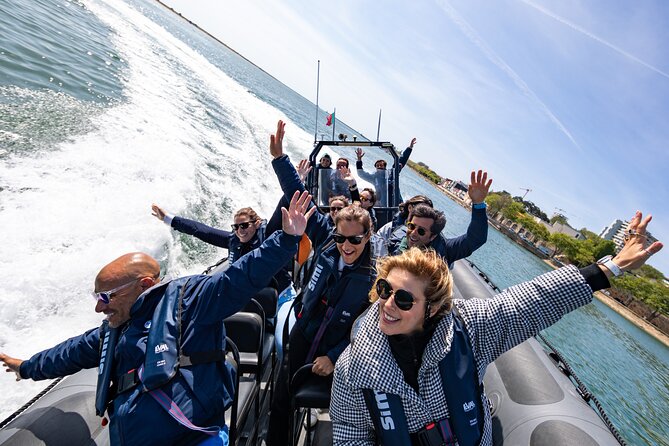
You will pass the Arrábida Bridge, which connects Porto to Vila Nova de Gaia. Built for road traffic to handle rising traffic needs starting back in the 1930s, it became part of a city solution that modernized crossing routes beyond the older bridges.
A fun detail with practical meaning: during its inauguration in 1963, there were four lifts built so pedestrians could cross the distance between the river level and the boardwalks. The lifts stopped working in the mid-1990s. From the water, you get a clear “this bridge is for vehicles first” feeling.
Stops 5 and 6: Tram history at Museu do Carro Electrico and the tile-covered church
This is one of those pairs of sights that can help you add depth later, even if you are just seeing them from the river now.
Near the river is Museu do Carro Electrico, founded in 1992 to preserve electric cars and other vehicles with historical value. It’s in a building that used to be the Massarelos Thermoelectric Plant built in 1915 for energy production for Porto’s electric vehicles.
If you later want to connect the dots, this is where the city’s transport evolution becomes tangible. The museum’s design is described as a throwback with wood and iron inside, plus seats that allow you to choose which way to turn.
Also in this zone is Igreja da Confraria das Almas do Corpo Santo de Massarelos, built in 1776. It’s divided into three parts by pilasters, has a tile-covered facade, and features church details like Corinthian capitals and a circular window near the top. Even if you do not step inside, the architectural cues are easier to spot when you approach from the water.
Stop 7: Alfândega Porto Congress Centre, the old Customs building energy
The waterfront here is marked by the New Customs building style: mercantile, structured, and built with iron mixed with other materials. The building was designed by French architect Jean Colson and reflects the mercantile dynamism that centered on the Douro’s banks.
You can also notice the contrast with older Ribeira architecture—this is a very different look from the older, tighter streets closer to the historical center. That contrast is part of what makes river viewing valuable: it highlights how Porto expanded and modernized its waterfront roles over time.
Stop 8: Passeio das Virtudes, a vertical garden with city-to-river sightlines
Passeio das Virtudes is in what used to be the Companhia Hortícola Portuense. The garden is described as vertical, meaning it works in terraces down the slope. That matters because it creates viewpoints over both Porto’s Alfândega area and out toward Vila Nova de Gaia.
If you enjoy photographing from scenic edges rather than street-level, this is the kind of place you may want to return to after the boat ride. The terraces are designed so a lot of the garden gives you river views, not just a park feel.
Stop 9: Torre dos Clérigos and the promise of a big climb
Torre dos Clérigos, designed by Italian architect Nicolau Nasoni, is a major Porto landmark: completed in 1763 and more than 75 meters high. The tower has served multiple roles over time, not just a bell tower but also an orientation point for boats and a strategic point in military contexts.
On the boat, you mostly get the exterior silhouette and location. But the details are useful if you decide to go further later: visiting includes a 225-step walk to the top for a panoramic view across Porto and Gaia.
Even if you skip the climb, having that number in your head changes how you look at the tower. You realize you are looking at a true city vantage point, not just decoration.
Stop 10: Cais de Gaia and the wine-cellar waterfront
Cais de Gaia is the Vila Nova de Gaia waterfront tied closely to Port wine. Historically, this quay served as a shipyard and trading post since the 18th century, and Rabelo boats would anchor here to unload barrels for aging in Gaia’s cellars.
After a refurbishment that ended in 2003, the quay became more attractive for leisure and tourism, and it won a Tourism Award for enhancement of public space. From the river, you can see why this area became a visitor magnet: it is visually tied to the wine industry and it sits right where the city meets water traffic.
Most of the cellars are here, and many offer guided tours plus tasting. The number given is about 30 different cellars. So, even though the boat tour is quick, it helps you pick a direction for your next half-day: wine tastings are easy to plan once you see how the waterfront is laid out.
Stop 11: Rabelo boats and the working-wine tradition
Rabelo boats are the signature vessels of the Douro. For decades, they transported Port wine between the Douro wine region and the cellars of Vila Nova de Gaia.
The reason they matter in your experience is context. The route wasn’t gentle. There were no dams in the past, currents were treacherous, and navigating narrow gorges required experienced sailors. That makes the river feel less like a scenic postcard and more like a real transportation corridor.
With the completion of the railway line, the last voyage for wine transportation is believed to have been in 1964. Seeing the idea of these boats from the river today gives you a sense of what changed: the region moved from water logistics to rail.
Stop 12: Ribeira, the UNESCO core along the water
Ribeira is one of Porto’s oldest and most popular areas and part of the UNESCO World Heritage Historical Center, with medieval origins. It’s long been a commerce and people-movement zone because the river shapes where work and transport happen.
There’s also a human story you can keep in mind while you pass: the Ribeira’s Duque was known for saving people from drowning. After his death, a tribute was paid, and the square near the pillar of Luís I Bridge is named after him.
That’s the kind of detail that turns a river ride into more than quick sightseeing. You start looking at the waterfront as a stage for real daily life, not just views.
Stop 13: Paço Episcopal and the bishops’ residence above the cathedral
Paço Episcopal of Porto is the former residence of the bishops of Porto. It sits adjacent to the Cathedral of Porto and, because of its elevated position, it dominates the landscape of the historical center.
This is another sight that helps you understand why the city feels layered. From the water you get a strong sense of vertical spacing: river level, mid-level neighborhoods, and then the hilltop features that command views.
It is classified as a National Monument since 1910, which signals that this is a lasting architectural anchor, not a passing stop.
Stop 14 and 15: Dom Luís I Bridge and Serra do Pilar’s circular church
Dom Luís I Bridge is the big connection between Porto and Vila Nova de Gaia. It measures about 395 meters long, roughly 8 meters wide, and it has a two-deck structure. The designer is Théophile Seyrig, working under King Louis I, and the bridge fits the Eiffel-style architectural approach Seyrig had worked on before.
From the river, you can’t help but notice how the bridge also acts like a framing device. It ties together Porto’s waterfront and Gaia’s wine side into one sweeping visual.
Right after, Serra do Pilar Monastery appears on the landscape. It is an austere 17th-century church with a circular floor plan and an imposing hemispherical vault. It was listed as UNESCO World Heritage in 1996 and classified as a National Monument. Inside, it preserves gilded and white carved woodwork and a cloister with a circular vault supported by 36 Ionic columns.
You can also connect this monastery to military history: in 1809 during Napoleonic invasions and again in 1832–33 during liberal struggles, the location was important as a fortress and artillery base. From the water, you feel why a circular, fortress-like structure would matter in a defense plan—visibility and control over river approaches.
Stop 16: Jardim do Palácio de Cristal and the Crystal Palace memory
Jardins do Palácio de Cristal are tied to the original Crystal Palace project. Construction began in 1861, and the palace was inaugurated on 18 September 1865 by King D. Luís. Later, the original palace was demolished in 1951 to make way for what is today’s Super Bock Arena.
The garden design is credited to Emil David, who also designed parts of the Crystal Palace gardens. The project includes areas like Avenida das Tílias and Avenida dos Plátanos and balconies over the Douro. The description also lists nearby landmarks on Avenida das Tílias, including the Almeida Garrett Municipal Library, the Concha Acústica, and the Chapel of Carlos Alberto da Sardenha.
Even if you only see it quickly from the boat, it helps you understand Porto’s “garden viewpoints above the river” pattern. If you love scenery, this park is the kind of place you can return to after the speedboat for slower photos.
Stop 17: Reserva Natural Estuario do Douro and the bird corridor idea
The Douro Estuary nature reserve is described as 66.35 hectares on the south bank near Afurada and includes Cabedelo and São Paio Bay. The highlight is wildlife, especially birds, thanks to the migratory corridor called the East Atlantic Route.
One practical note: the visit is possible freely through a suspended walkway. Even if you do not do that walk right after this tour, knowing it exists changes what you notice from the boat. You start scanning for bird life and the sense that the river mouth is more than a sightseeing edge.
Stop 18: Jardim do Passeio Alegre and the turtle fountain
Passeio Alegre Garden sits where the Douro River waters meet the Atlantic Ocean. Designed in the late 19th century and classified as Public Interest Property, it is rich in flora and includes older trees.
Architect Émile David is connected to both this garden and the Crystal Palace gardens. From the information, there’s also a “turtle fountain” designed by Nicolau Nasoni, built in the 18th century for Quinta da Prelada and later transferred to Passeio Alegre in the 20th century. The garden also features obelisks designed by Nasoni and a bandstand that sometimes hosts concerts.
For me, this is a great final note to remember: the boat ride gives you the motion. If you want a calmer follow-up, a shaded garden by the water is an easy match.
What to bring (and what to skip) for a comfy, fun ride
This tour is short, so you do not need a huge pack. Still, you will enjoy it more if you plan for water spray and quick photo stops.
- Wear something you do not mind getting damp in. Even with jackets available if needed, spray can happen.
- Bring sunglasses and sun protection. You’ll have bright waterfront views.
- Keep your phone secure. If you plan to film, use a cover or bag.
- A light waterproof layer helps. It is a speedboat, so conditions can feel cooler once you’re moving.
Because you have a life vest on, you can relax about safety, but you still want to be comfortable.
Who should book this speedboat and who should pass
This fits well if you want an active, quick way to see Porto and Gaia from the water. The 45-minute length is ideal when you are tight on time, and the focus on major bridge viewpoints plus waterfront landmarks is great for getting your bearings fast.
It is also a good choice if you like “hit many highlights quickly” days and you do not need long stops. The boat setup with three boats and small groups per boat helps keep the ride lively without feeling chaotic.
I would pass if you want a slow pace with lots of time inside buildings. This experience is about movement and views, not extended museum visits. Also, if speedboats are not your thing, this might feel too energetic.
Should you book Porto 6 Bridges with BBDouro?
Yes, if your priority is quick, scenic power-from-the-river views and you like a little action. The price is reasonable for the experience because you get a compact tour that covers both sides of the river and ties together major Porto and Gaia landmarks in one ride, rather than piecing it together yourself across multiple transport legs.
I’d especially consider booking if:
- you want the six-bridge perspective in one go
- you like photographing from moving viewpoints
- you are traveling with people who can handle short durations and motion
If you prefer slow sightseeing and long onshore time, then you might get more value from land-based viewpoints and separate tickets for the big sights you want to explore up close.
FAQ
How long is the Porto 6 bridges speedboat tour on the Douro?
The tour is about 45 minutes.
Where do I meet for the tour?
The meeting point is BBDouro Douro Marina, R. da Praia, 4400-554 Vila Nova de Gaia, Portugal. The activity ends back at the meeting point.
Is the tour offered in English?
Yes, it is offered in English.
Do I need a printed ticket?
No. It uses a mobile ticket.
What is the minimum age to join?
The minimum age is 10 years old.
What happens if the tour is canceled due to poor weather?
If it’s canceled due to poor weather, you’ll be offered a different date or a full refund.
Can I get a full refund if I cancel?
Yes. You can cancel up to 24 hours in advance for a full refund. If you cancel less than 24 hours before the start time, the amount paid will not be refunded.