REVIEW · SESIMBRA
Arrábida: Setubal, Sesimbra Coasteering & Speedboat Tour
Book on GetYourGuide →Operated by WIND · Bookable on GetYourGuide
Arrábida coasteering has a way of making you feel instantly awake. You’re bouncing between cliffs and crystal water, with speedboat travel and hands-on challenges like climbing, rappelling-style moves, and jumps into sea-blue bays. The coastline sits inside Arrábida Natural Park, so there’s always something going on besides just adrenaline.
What I like most: the tour pairs action with real park context. You learn about the wildlife, flora, and geology with local biologists, then you move along the intertidal zone where the rock, tide, and sea life all meet. Second, the guides focus on keeping it fun without rushing you, and you get real support if you want easier options for the bigger jumps.
One thing to consider: it’s not a casual beach walk. You’re in the water a lot, doing active climbing and jumping, and the tour isn’t suitable for people with heart problems, back problems, mobility impairments, or for kids under 8.
In This Review
- Quick hits you should know before you go
- Arrábida Natural Park: a coastline built for coasteering
- The 4-hour flow: briefing, speedboat transfer, then rock-to-water action
- Speedboat ride + the route through the intertidal zone
- Jumping 2–8 meters: thrilling, guided, and built with alternatives
- Caves and secret beaches: Portinho da Arrábida and Ribeiro do Cavalo
- Wildlife and geology talks: what you actually learn while you move
- Gear and safety: buoyancy aids, certified rescue skills, and strict rules
- Meeting point at Creiro’s Beach (and the quick way to find the team)
- What to bring (and what to leave at home)
- Who this tour suits best, and who should skip it
- Price and value: why $70 can feel fair for 4 hours
- Should you book Arrábida coasteering with speedboat transfer?
- FAQ
- How long is the Arrábida coasteering and speedboat tour?
- What’s included in the price?
- What should I bring?
- Are open-toed shoes allowed?
- What languages do the instructors speak?
- How high are the jumps?
- Can I cancel if my plans change?
Quick hits you should know before you go
- Arrábida Natural Park setting: rocky bays, caves, and secret-feeling shoreline between Setúbal and Sesimbra
- 2–8 meter jumps: more than a dozen jumps, but with safety-first guidance
- Wildlife + geology time: local biologists explain what you’re actually looking at
- Speedboat adds the fun: quick water transport and a lot of scenic time from the sea
- Non-cable progression: you use buoyancy and protection gear instead of steel cables
Arrábida Natural Park: a coastline built for coasteering
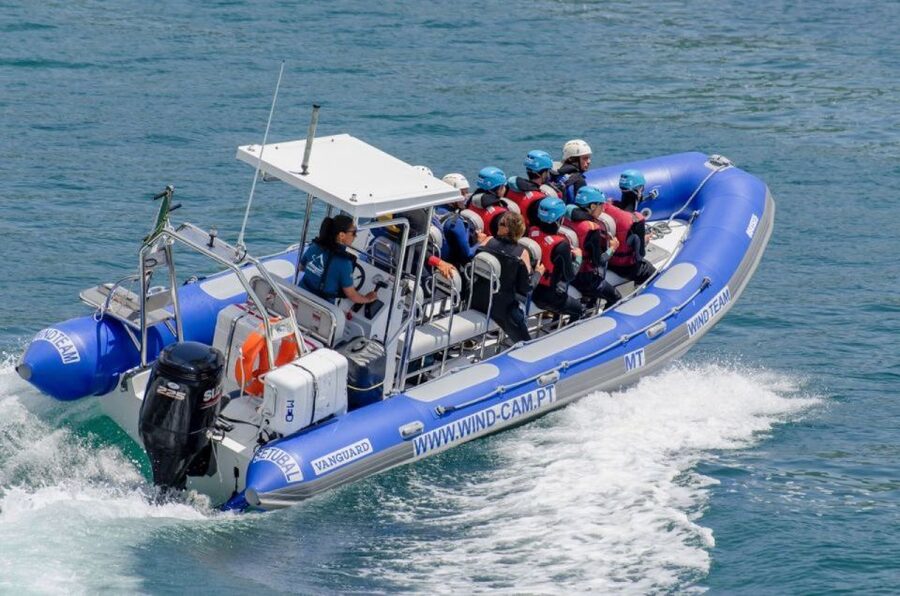
This is one of those places where the coast looks like it was designed for coasteering. The Arrábida area has steep rock edges, natural inlets, and sheltered bays that turn into playgrounds when conditions are right. You’re not just jumping off random spots. You’re moving through a planned stretch of coastline inside the park, so the route tends to feel varied instead of repetitive.
A big part of why this tour works well is that it mixes the three things that make coasteering memorable: scrambling up and across rock, getting your legs wet with swimming and floating, and then committing to the jump. Even if you’re not a “cliff person,” the guide-led pacing helps you find your comfort level fast.
The 4-hour flow: briefing, speedboat transfer, then rock-to-water action
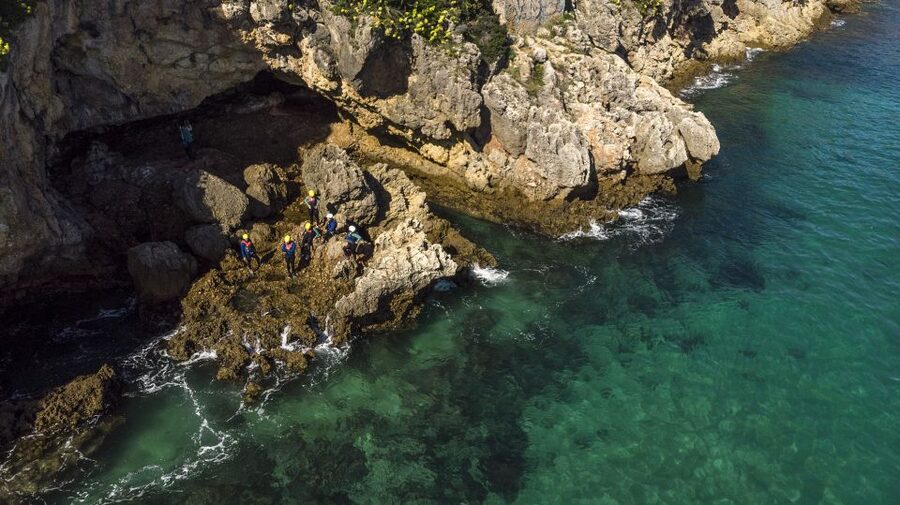
Your day starts with a proper setup, not a rushed meet-and-go. You’ll meet your guide, get a safety briefing, and go over how your gear works before you ever get near the water. That matters here because you’re doing multiple skills in one session—climbing moves, swimming sections, and jumps from different heights.
Then you hop on the speedboat to reach the activity start point. It’s a short transfer, but it’s also part of the experience: you get an immediate feel for the coastline from the water, and you’ll see where you’ll be working along the cliffs and bays.
After that, the bulk of the 4 hours is active movement: climbing along the rock, swimming through stretches between rocks, and jumping into the sea. Expect more than a dozen jump moments during the session, with jump heights generally ranging from 2 to 8 meters. The tour finishes back at the start point by speedboat, so you’re not stuck doing a long haul out on your own.
Speedboat ride + the route through the intertidal zone
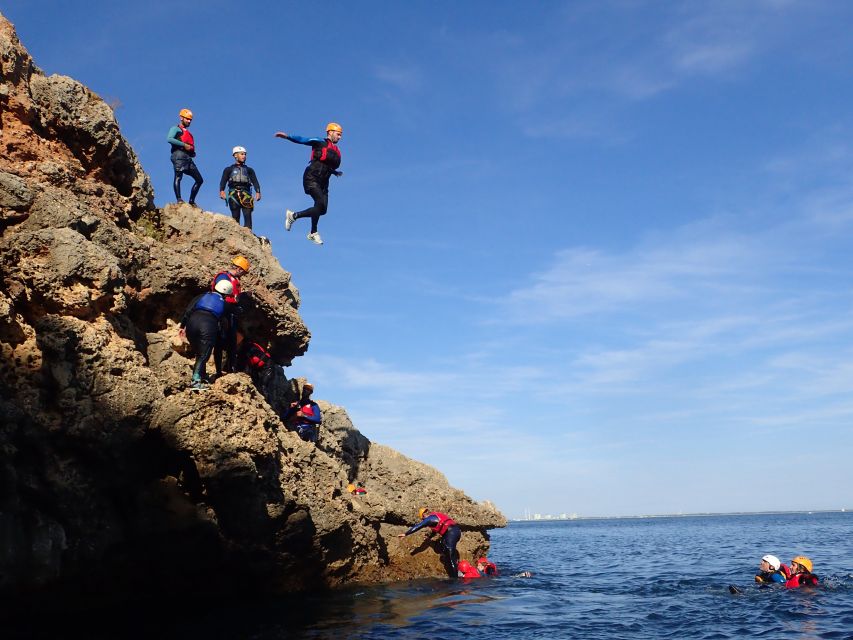
The speedboat portion isn’t just “transport.” It helps you cover ground efficiently, which is what keeps the tour feeling packed with variety. From the boat, you’ll get those postcard views of Portugal’s bays while you travel between access points.
The coasteering route runs through the intertidal coastal zone, which is where the timing really matters. The intertidal zone is the part of the coast that changes with the tide, so your guide’s experience is what turns the coastline into a route that’s both safe and fun. When conditions are off, the provider can change the route based on weather or logistical and safety concerns, so you’re not going to be blindly pushed into the plan.
If you like wildlife spotting, keep your eyes open. You learn about what lives here, and you might notice sea life along the rocky edges. Some groups have reported seeing fish, crabs, and even dolphins during the outing, but it’s never something you can count on every time.
Jumping 2–8 meters: thrilling, guided, and built with alternatives
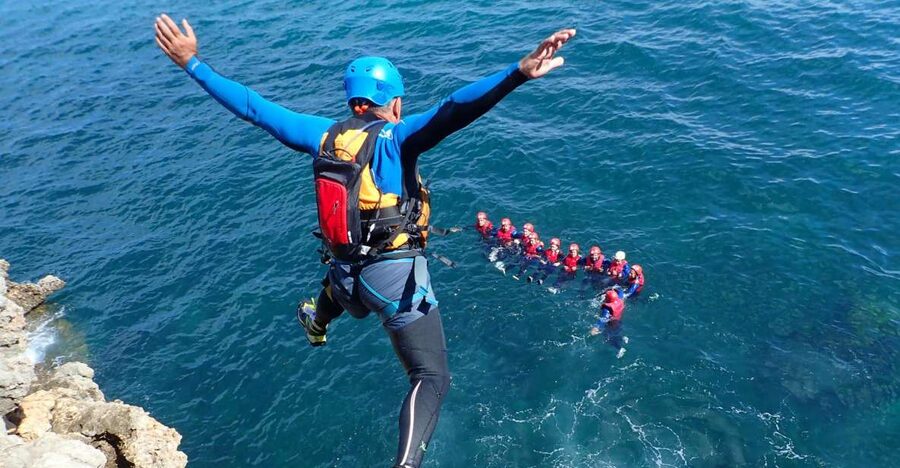
Let’s talk about the jumps, because that’s usually the headline. You’ll do multiple jumps during the session—more than a dozen—at heights between about 2 and 8 meters. That range is big enough to feel exciting, but the key is that the guides manage the experience so you don’t feel forced.
This tour isn’t a one-size-fits-all jump festival. The guides commonly adjust to your comfort level and give alternatives when someone doesn’t want the higher drops. If you’re nervous about height, you can still participate fully and focus on the swimming, climbing, and the smaller jumps first. You’ll feel the adrenaline, but you’ll also get control of how hard you push yourself.
Caves and secret beaches: Portinho da Arrábida and Ribeiro do Cavalo
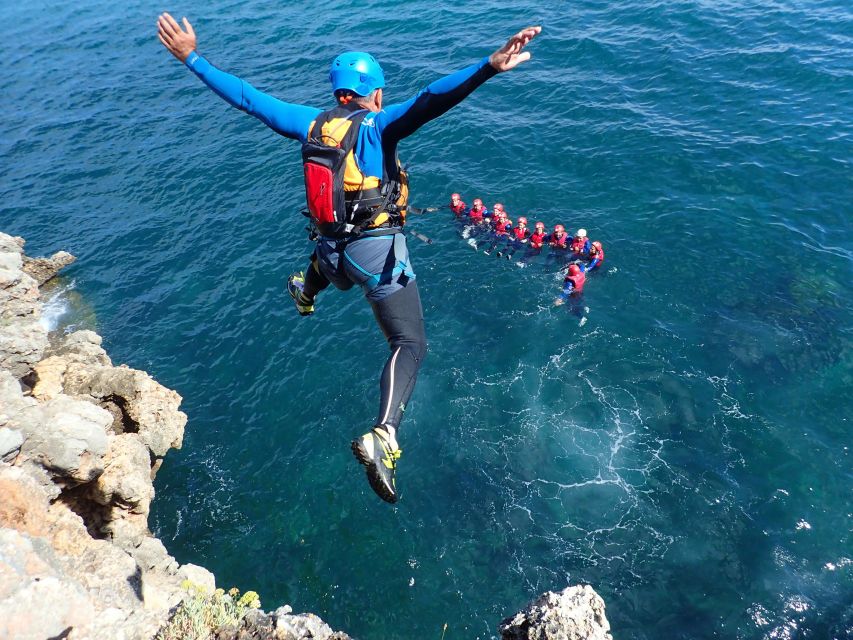
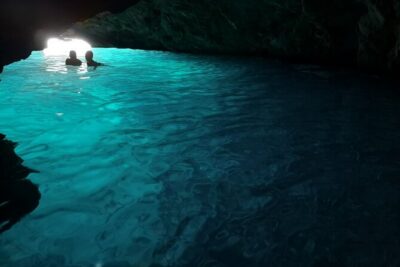
One of the best reasons to choose this particular Arrábida coasteering outing is the “mystery” factor built into the route. You visit caves and you get to explore secret-feeling beaches and coves, including places like Portinho da Arrábida and Ribeiro do Cavalo.
These aren’t just scenic stops. Getting close to caves means the coastline feels more like a system than a photo background. You’re moving into and out of areas where waves, rock shape, and water movement all change what you see and how you move.
Between climbing and water time, the caves add variety. They break up the rhythm and give your brain a different kind of focus, which is great when you’ve been working hard physically.
Wildlife and geology talks: what you actually learn while you move
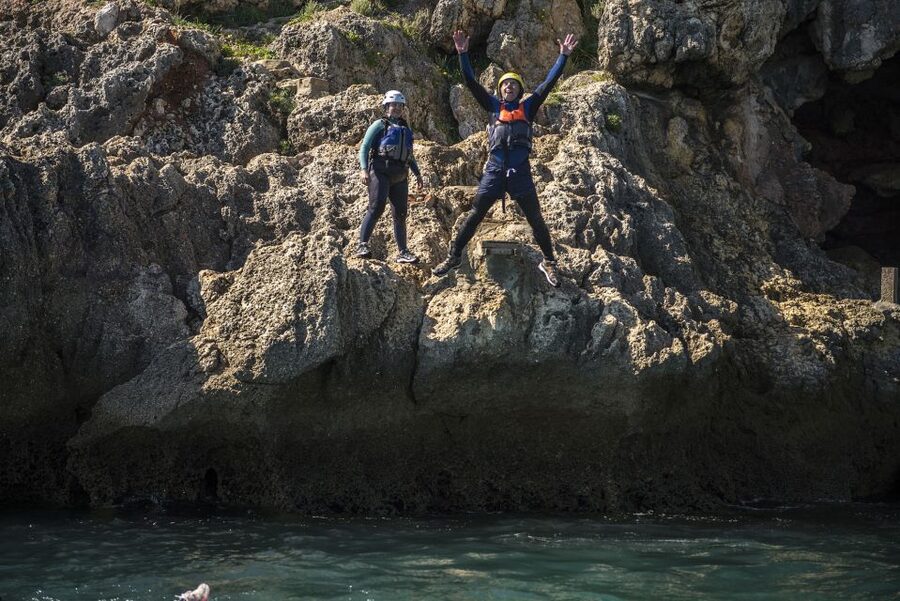
Some tours tell you generic facts. This one gives you specific context for the place you’re in. You learn about Arrábida Natural Park’s wildlife, and you also get info on flora and geology while you travel through the rocky and aquatic areas.
In practical terms, that changes how you experience the coast. Instead of just thinking about your next jump, you’ll start noticing things like rock formations, how the coastline is shaped, and what kinds of life you might be passing through. When the guide’s explanations come alongside the action, the information sticks because you’re looking at the real setting while they talk.
Gear and safety: buoyancy aids, certified rescue skills, and strict rules
Coasteering feels wild, but it isn’t guesswork here. You’re provided with neoprene wetsuit, helmet, and life jacket. You’ll also have buoyancy aids and individual protection gear, and the progression happens without artificial aids like steel cables.
That combination is what makes it feel safer than it looks. You still do real movement—climbing, jumping, and swimming—but the gear supports you in the water and on the rock.
Safety standards are clearly part of the company’s identity. The instructors have Swiftwater Rescue Technician certification, and the activity provider is an active member of the National Coasteering Charter (NCC), the first international organization promoting safe coasteering practices. In plain language: there’s a system behind the fun.
You should still listen to instructions and follow them exactly. If a guide tells you a specific move or a timing choice, it’s not for fun. It’s because water and rock don’t care about your bravery.
Meeting point at Creiro’s Beach (and the quick way to find the team)
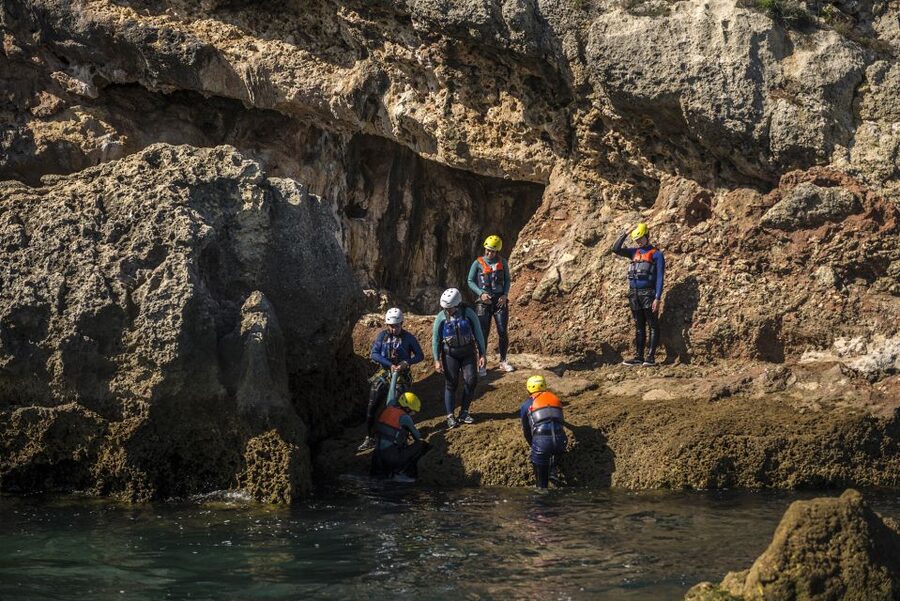
You’ll meet at Creiro’s Beach. When you reach Creiro’s Beach, turn right, and you’ll find the team after Anicha Bar.
In high season, getting there can be slower than you expect because road access may be limited at times to avoid overcrowding. If you’re going in summer, I’d plan extra buffer time so you’re not arriving stressed and sprinting your wetsuit-day.
If you have to ask for help, do it early. These tours depend on everyone being ready before the briefing, and it’s easier for the team to adjust if you’re on time.
What to bring (and what to leave at home)
This tour is gear-heavy, but you still bring the basics. Pack:
- Swimwear
- Towel
- Biodegradable sunscreen
- Water shoes
- Hair tie
Leave open-toed shoes at home. The activity rules are strict about footwear because you’ll be climbing and moving near uneven rock.
Also, plan your outfit like you’re going to be wet. You’ll change nothing later into a dry, crisp look. The best move is to bring a towel and keep your stress low.
Who this tour suits best, and who should skip it
This is best for people who want a hands-on outdoor workout with real water time. You’ll be active, you’ll get wet, and you’ll do jumps and climbing. If you’re looking for a low-energy sightseeing cruise, this won’t match.
It’s also not for everyone. The tour isn’t suitable for:
- children under 8
- pregnant women
- people with back problems
- people with mobility impairments
- people with heart problems
- visually impaired people
If you’re a beginner to outdoor adventures, you can still do this as long as you’re willing to follow instructions and handle the water and basic climbing. One of the nice things is that guides can match what you want to do with what feels safe and fun.
Price and value: why $70 can feel fair for 4 hours
At about $70 per person for a 4-hour experience, you’re paying for more than just the coastline time. You get:
- a certified instructor/guide
- speedboat transportation
- wetsuit, helmet, and life jacket
- water and energy bars
You’re also getting the value of a guided route through a tricky environment: rock, tide, and jumps all require competent leadership. In practice, that’s what you’re really buying—someone who can read conditions, manage timing, and keep the group moving safely.
Where the tour feels like strong value is in the density of experience. You get repeated jumps (2–8 meters), cave and beach exploration, and swimming and climbing in one session, without having to organize multiple activities yourself. If you’ve got limited time around Lisbon and want one big outdoor hit, this is a solid use of your day.
Should you book Arrábida coasteering with speedboat transfer?
Book it if you want an active coastal day with real jumping, cave exploration, and a guide who keeps you safe while still letting you have fun. This is also a great match if you like learning while moving, since the park wildlife and geology explanations add meaning to what you’re seeing.
Skip it if you need a calm, low-impact experience, or if you fall into the tour’s unsuitability categories (back/heart issues, mobility impairments, pregnancy, or young kids). Also, if you’re terrified of water entry even with support, be honest with yourself; the tour involves swimming and repeated water contact.
If you go, show up ready to listen during the briefing and be flexible if conditions change. Do that, and you’ll come away with a day that feels like far more than a checklist excursion.
FAQ
How long is the Arrábida coasteering and speedboat tour?
The duration is 4 hours.
What’s included in the price?
The tour includes a certified instructor/guide, transportation by speedboat, a neoprene isothermal wetsuit, helmet, and life jacket, plus water and energy bars.
What should I bring?
Bring swimwear, a towel, biodegradable sunscreen, water shoes, and a hair tie.
Are open-toed shoes allowed?
No. Open-toed shoes are not allowed.
What languages do the instructors speak?
Instructors speak Spanish, English, French, and Portuguese.
How high are the jumps?
Jumps are typically between 2 and 8 meters high, and you can do more than a dozen jumps during the session.
Can I cancel if my plans change?
Yes. You can cancel up to 24 hours in advance for a full refund.